The Department of Justice announced on July 26, 2019, that it approved the T-Mobile/Sprint merger under a series of conditions involving divestitures to Dish Network. What do all the conditions of the transaction mean in plain English?
In short, Charlie Ergen’s Dish has been given a new lease on life for several years, while the impact across the industry in terms of pricing, competition and rollout of 5G is less clear—other than we can expect Verizon and AT&T to focus on implementing their respective 5G strategies while Sprint and T-Mobile integrate their businesses.

DISH gets Sprint’s prepaid businesses
Dish Network is becoming a wireless service provider with 9.3 million customers. Until it builds out its own network, Dish will be the second largest MVNO in the United States. The brands that Dish is buying are in distress.
According to the T-Mobile/Sprint/Dish announcement, Sprint’s prepaid business has almost 7,500 distribution points from Walmart and independent retailers. As a comparison, T-Mobile’s MetroPCS has over 10,500 distribution points. More importantly Sprint’s prepaid business lost over the last year about 3,000 distribution points from Target, Best Buy and Meijers due to poor performance.
This represents a decrease of about 30% of Sprint prepaid sales distribution network and probably at least of 25% of Sprint prepaid’s gross adds. This would indicate that Sprint prepaid’s gross adds will decrease from roughly 4 million over the last year to 3 million going forward, translating into a subscriber loss of the same number. The $1.4 billion that Dish pays for Sprint’s prepaid business roughly represents the expected future cash flows of somewhere between $1.5 billion to $2 billion from the 9.3 million customers over their expected remaining life time. Building a retail store costs between $1 million and $2 million. If Dish wants to have a similar physical presence as the other competitors, it would need around 2,000 corporate retail stores for $2 billion to $3 billion cost.
What is interesting is that 9.3 million prepaid customers are being transferred from Sprint to Dish but Sprint only recognizes 8.1 million as prepaid in its financial statement. The solution to this puzzle is that Sprint counts any prepaid customer that pays for their phone in installments, like the BoostUp program, as postpaid customer, not prepaid.

DISH gets Master Services Agreement for network access
The key in the Master Service Agreement (MSA) is the phased approach. Logically, Dish would add all new customers onto the T-Mobile network and subsequently to its own 5G network. With Sprint’s 4.37% prepaid churn rate, mathematically all of its customers quit the carrier within 22 months. The big question here is what route Dish will take. Dish intends to build a stand-alone 5G network based on the 3GPP Release 16 standard.
The problem is that 5G Release 16 has not been finalized yet—delayed until March 2020—as it has been caught in the crossfire of the U.S.-China dispute over 5G and Huawei. It takes roughly six to 12 months after the standard has been finalized for equipment to become available. Dish’s Ergen said he would like to have the first city up by the end of 2020. This is an extremely ambitious time line and assumes no delays in finalizing Release 16 and immediate availability of equipment and manpower to install the network, while design and deployment companies are at full capacity. Until then, Dish is dependent on T-Mobile as its host network provider.
Transition services agreement to support prepaid customers
This means that Sprint’s CDMA network will be operational for up to three years and that the New T-Mobile will provide core networking services if needed during that time. Considering that the expected average life of Sprint’s prepaid customer base is 22 months, a 50% additional life will provide services for 90% of the customers. After the three years, the customers have to be off the Sprint network, either on Dish’s 5G Network or T-Mobile’s network.

DISH gets Sprint’s 800 MHz spectrum licenses
Low-band spectrum is needed to provide coverage outdoors and reliable service inside buildings since the signals travel far and penetrate buildings well. Sprint has a nationwide 800 MHz license with 14 MHz of bandwidth. Fourteen MHz is sufficient spectrum to provide voice communications in people’s homes and businesses, but not enough for high-speed data. Even using carrier aggregation with higher bands and therefore more bandwidth will be challenging due to the inferior propagation characteristics of the higher band spectrum. The two-year lease-back is there to continue to allow Sprint to maintain its current coverage without impacting Dish’s actual deployment plans.

Dish gets option to take over decommissioned cell sites and retail locations
One of the biggest challenges for Dish is to quickly build a wireless network and have a large retail distribution network. After T-Mobile has integrated the Sprint sites into its network, Dish will be able to take over decommissioned cell sites and retail locations, which is a blessing and a curse at the same time. The cell sites and retail locations that the New T-Mobile will decommission and look to divest after the merger closes are going to be the most expensive, least performing assets. Some sites and retail locations might work for Dish, but in general the rejects of another carrier’s are not the best foundation to build a real competitor.

Dish gets agreement to engage in negotiations with T-Mobile for Dish’s 600 MHz spectrum
Dish owns at least one license in all 486 nationwide license areas. This could serve as Dish’s low band frequency to cover in-building customers very well. T-Mobile has a 600 MHz nationwide license that it uses for its 5G network, especially in rural America. Neither AT&T nor Verizon were allowed to bid on the 600 MHz licenses and therefore are unlikely buyers. This makes T-Mobile the natural buyer.
More 600 MHz spectrum would always be useful for T-Mobile as it plans to bring wireless broadband and TV into the parts of the country that do not have broadband at all. At the same time, these parts of the country are where satellite TV providers like Dish are the strongest. It remains to be seen how likely Dish is to arm T-Mobile with more spectrum to attack satellite customers with a better and faster offer. The agreement to engage in a negotiation is not particularly meaningful, considering that all other negotiations to buy or sell spectrum have not needed an explicit agreement to negotiate.
As part of this agreement, Dish has also committed itself to build a 5G network with speeds exceeding 35 Mbps that covers 70% of the U.S. population with 5G by June 14, 2023 or it has to pay $2.2 billion to the U.S. government. Dish had also previously committed to the FCC to have deployed a core network and provide 5G service to more than 20% of the U.S. population by 2022. Dish’s AWS-4, 700 MHz, and H Block licenses need to cover 50% of the U.S. population by June 2023 to get a two-year build-out extension. All of the build-out requirements culminate in the 2022 and 2023 time frame. It’s either build out or return the licenses to the U.S. government.

What’s the impact on the market?
Currently, what the Dish deal actually represents is not that Dish is becoming a facilities-based network operator, but a $3.6 billion option to become one, when 5G Release 16 equipment becomes available.
By choosing to build a stand-alone 5G network, Dish puts itself at the mercy of the U.S./China trade conflict with all the ups and downs that come with it. With all the exuberance about a new entrant, we have to remember it will take several years for Dish to become a facilities-based operator. In the interim, Dish will be an MVNO with all the constraints that come with it. For decades the FCC did not consider MVNO full competitors as they are dependent on a network operator for its services and how the contract has been structured financially.
We also need to keep in mind that the T-Mobile/Sprint deal will not close until the lawsuit with the states is resolved. The trial pits now 15 state attorneys general against this deal, which could start as early as December. After the deal was approved by the Department of Justice, the Republican attorney general of Texas joined his 14 Democratic attorney generals. This development creates a lot of doubt about the notion that the Department of Justice conditions would address most if not all concerns of the state attorneys. The Republican Attorney General of Texas would not have gone against the Republication Department of Justice if he thought the remedies ordered in the federal approval of the merger would be anywhere near what he thought necessary. Just when T-Mobile, Sprint and Dish could hope for an easy settlement with the states, the new plaintiff clearly upset that notion.
The longer the state trial takes, the less time Dish has to build out as the deadline for 70% population coverage is fixed. We also cannot discount that Dish pulls out at the last moment and sells its spectrum. It’s spectrum is worth much more—with some estimates around $30 billion—than $3.6 billion that it paid for the Sprint prepaid business and the fine to the government. Not buying the 800 MHz from the New T-Mobile would cost only $72 million.
The other white elephant in the room is that Dish does not own millimeter wave (mmWave) spectrum. If a key differentiator of 5G is ultra-high speeds which are only achievable with the multiple hundreds of MHz wide channels, then Dish is at a serious disadvantage of being the only competitor in the market without it. The experience of the last decade has clearly shown that network quality and speed is indispensable for a wireless competitor—the lack of it was Sprint’s undoing.
Dish mentioned on their Q2 2019 earnings call that they intend to migrate from being an MVNO on T-Mobile’s core to being an MVNO on its own core to being a mobile network operator. A core-to-core connection between Dish’s and T-Mobile’s cores in conjunction with eSIM/dual SIM would allow seamless roaming with uninterrupted voice and data sessions as Dish customers would move on and off the respective networks.
On the network design level, Dish would build a fully virtualized 5G network, similar to Rakuten’s virtualized 4G network, including Open RAN and edge computing capabilities. This would allow Dish to build the network 25% cheaper and substantially lower operating costs. This, together with the MVNO deal, would allow Dish to be modestly profitable from the outset.
Dish also mentioned that it expects its network to cost $10 billion and that it would eventually need more funding. AT&T, Verizon, and soon the New T-Mobile will spend $10 billion every year to maintain and improve their already existing networks. Basically, $10 billion per year has become the standard capital expenditure spend for a nationwide carrier that wants to compete. Dish, without a network, will need more than $10 billion per year to catch up and be ready when the wholesale deal with T-Mobile expires in seven years. If it spends less like its peers, like Sprint did, Dish will suffer the same fate as Sprint.
Rolling out a wireless network city by city is not something that the U.S. wireless market has seen for 40 years. The nature of nationwide television advertising made it increasingly inefficient to go to market city by city but favored nationwide rollouts. A consumer could walk into a store anywhere in the United States and get the service they heard of.
It also gives competitors less insights of how the company will compete and more importantly less time to react to the product launch. A competitor that you see coming to new markets is not as impactful as one that launches nationwide. Digital advertising has made media campaigns a lot more surgical and localized but online only represents about 10% of wireless gross additions. It will be interesting to see how Dish is going to approach selling the different packages it is offering in different parts of the country.
Ultimately, Dish could be an aggressive competitor similar to what it is in satellite. Dish competes on price and features with good customer service. Unfortunately, at the current trajectory, the satellite business will become unprofitable in about three years as subscribers, revenue and profit are declining precipitously. The underlying profitability of Dish’s core satellite business, capital intensity of wireless, the hyper-competitiveness of the wireless industry, the vagaries of international politics, delays in technical standards, the fickleness of investors, and plain old execution risks are the biggest complicating factors in Dish becoming successful in wireless.
For T-Mobile, if the states’ suit gets successfully resolved, then T-Mobile got everything it wanted and had to give up on the things it didn’t want or need. Sprint’s prepaid business does not fit into T-Mobile’s brand line up with Metro by T-Mobile being their very successful prepaid brand.
Boost Mobile, Virgin Mobile USA and Sprint Prepaid are brands in distress and customer bases under pressure. If T-Mobile wouldn’t have found a buyer for them, they would have just let them wither on the vine collecting revenue from an ever smaller customer base.
The 14 MHz in the 800 MHz band is not enough spectrum to make a difference to T-Mobile, especially since it’s about only half of that along the border due to interference issues.
With the Sprint merger, T-Mobile has leapfrogged not only AT&T as second largest postpaid phone carrier, but it also has overtaken AT&T and Verizon in terms of traditional band spectrum, plus T-Mobile has more than 120 MHz in the 2500 MHz band. This lays the foundation for T-Mobile to regain the speed crown outside the 5G mmWave areas where their competitors have more spectrum deployed than T-Mobile.
When we combine Sprint’s spectrum with T-Mobile’s track record of 22 quarters of leading the industry in branded phone customer growth, we see a super-charged competitor that has now even more tools at its disposal to win against AT&T, Verizon and Dish. In Q2 2019, T-Mobile added 710,000 postpaid phone customers, AT&T added 72,000, Verizon added 245,000 and Sprint lost 128,000. In a nutshell, T-Mobile added more than twice as many valuable postpaid phone customers than AT&T and Verizon combined. With the Sprint acquisition, T-Mobile’s run of industry leading growth is likely to continue, if not accelerate.

If you missed our analyst call on Wednesday with Roger Entner, Peter Rysavy and Avi Greengart you can listen in now! Topics discussed included 5G network deployment, the future of smartphones in a 5G world, cloud computing, use cases for artificial intelligence, and more!

What to Listen For:

“Even though the opportunity to connect to 5G today is limited – it’s amazing that we can connect to 5G at all. Because when we started working on the standards we weren’t expecting any deployment until 2020. So we’re actually a year ahead of schedule which is remarkable for the complexity.” – Peter Rysavy, Rysavy Research

On the benefit of advancements in AI and AR technology: “If you’re trying to wire up an airplane, having a heads up display where it can show you how to wire up the airplane in real time, with overlays of what you’re seeing and what you should be seeing…the return on investment is crazy high. It’s so high in fact, that in that particular use case, Boeing and Airbus are willing to develop these systems in-house, building their own custom software, in some cases building their own custom hardware.” – Avi Greengart, Techsponential

“Another topic that’s going to be really interesting is the whole convergence issue of telecommunications with content…70% of wireless usage is video, and so video becomes more and more important and some of the more obscure things that nobody paid attention to will become much more prevalent. For example, the STELAR re-authorization.” – Roger Entner, Recon Analytics

Have Questions? Head to Twitter and Chat With Us:

Host Roger Entner: @RogerEntner
Peter Rysavy: @peter_rysavy
Avi Greengart: @greengart

Working 5G
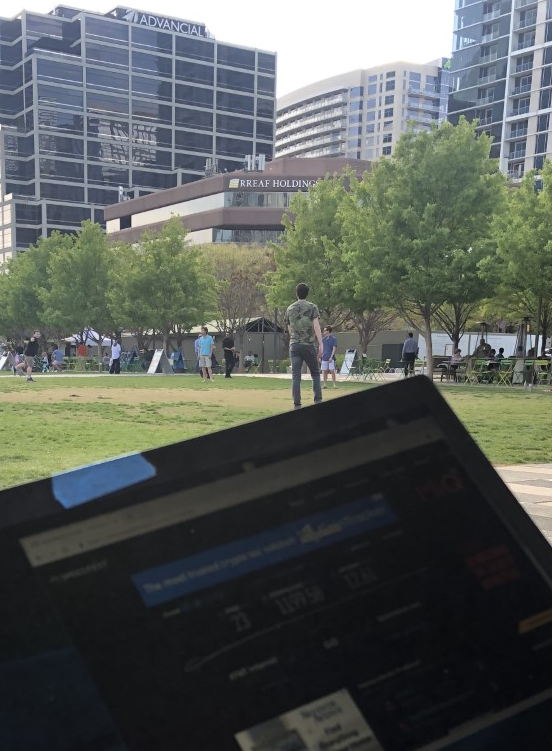
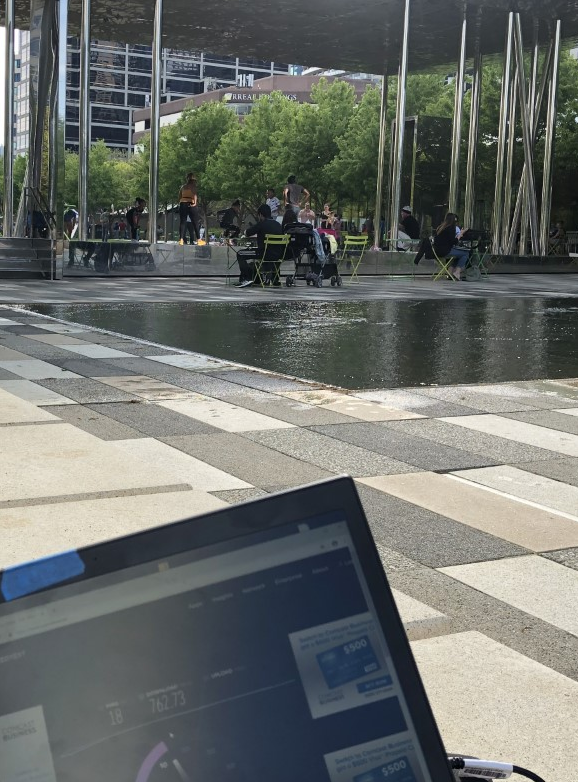
We are at the dawn of a new generation with 5th Generation networks launching. As with every new technology some launches are smoother and others are rougher. Since we are all doubting Thomas’s, we travel to the places where these networks are actually up to see with our own eyes if they work. During the first week of April, I was in Dallas to check on the status of AT&T’s 5G launch. Since smartphones with integrated 5G have not been launched yet, we tested AT&T’s network with their Netgear 5G hotspot. I done tests at approximately 50 meters, approximately 100 meters, approximately 200 meters, and tried to determine the cell edge to check the state of current technology.
For consistency purposes, I used Ookla’s Speedtest for all tests. To give you a benchmark, my Verizon FiOS fiber internet connection is 879 Mbit/sec at 1ms latency connecting to the Starry server in Boston. My AT&T Wireless LTE service on an iPhone X Model A1865 (Qualcomm chip version) in Boston was tested with 89 Mbit/sec and 58 ms latency connecting to the AT&T Wireless server in New York. Considering Boston is 215 miles from New York, we should deduct about 1 ms from the LTE connection speed time as light travels with 186 miles per millisecond to have a real apple to apples comparison. The 5G test in Dallas was to the server in Dallas.
I performed several tests at 50m, 100m, 200m and to determine the cell edge. The mmWave antenna is the little box to the upper right of the regular cellular antennas over the RREAF letters.

100m out from antenna

200m out from antenna

At 50 meters / 150 feet the speed was 1320 mbit/s at 24 ms latency, at 100 meters / 300 feet the speed was still at 1199 mbit/s and 23 ms latency. Going out to 200 meters / 600 feet, the speed dropped to 762 mbit/s but latency was at 18 ms.

At these speeds WiFi becomes the gating factor if you are using it as a hotspot. Even at 200 meters / 600 feet download speeds came close to my fiber connection at home and is at the level where the bottleneck is the connection to the website and not the connection to the consumer device. These are impressive speeds, especially this early in the 5G life cycle and deployment.
As I went further out to the cell edge, the signal finally gave out at approximately 250 meters. With the antenna being a small little block at the top right of the picture below, just above the hall, left from the trees.

Currently, the signal and thereby speeds drop off rather quickly beyond 200 meters / 600 feet, which shouldn’t be surprising considering AT&T uses 39 GHz for 5G. Operators that use lower frequencies should have large cells in the same conditions, simply due to the law of physics.
In a nutshell, 5G works and the speeds are actually better than what a lot of people expect. The good news is that performance will improve from the base line tested here as carriers and vendors learn more and improve software and deployment. Considering that in urban deployments, cell sites are usually spaced at 100 to 200 meter, 300 to 600 feet anyway, we can expect robust speeds from 5G without a dramatic increase in capex for a basic layer of 5G. This increases the time to deployment and reduces cost as existing infrastructure and backhaul is being used. When we get to a more robust deployment with limited line of sight and when the network gets more loaded, we will need to support it with more small cells. From a regulatory perspective, this gives us a little bit of time to stream line the US siting policies so that our 5G deployment does not fall behind that of China and other countries with fewer rules and regulations on where to deploy small sites.
Also, the limitations on the number and placement of 5G antennas on devices plays a significant role . Based on FCC filings the Motorola 5G addon has four antennas with a 7 centimeters (cm) or roughly 3 inches proximity sensor. When something comes within the 7 cm of an antenna the antenna shuts off. With 7 cm it is quite possible that somebody’s hand is within 7 cm of all four antennas and with it turns all four antennas off. Can’t wait for another press event about talking about holding the phone in the wrong way. Also it seems like Verizon or Motorola chose a technology indicator that only changes when in an active 5G session causing the indicator to change often which caused the confusion. These problems can be overcome with more antennas and proximity sensors that have a more precise proximity sensor.

President Trump’s re-election campaign recently spun the wireless industry into turmoil again. Kayleigh McEnany, national press secretary for President Trump’s 2020 reelection campaign, told Politico that “A 5G wholesale market would drive down costs and provide access to millions of Americans who are currently underserved. This is in line with President Trump’s agenda to benefit all Americans, regardless of geography.”

This new message comes after months of private comments by Trump 2020 campaign manager Brad Parscale and adviser Newt Gingrich that promoted a different plan for 5G, one that would have the federal government seize 5G spectrum from the Pentagon and give it to a private company to manage and lease to other, private companies for use. Enter Rivada, a company headed by Declan Ganley and backed by political heavyweight Karl Rove and venture capitalist Peter Thiel.

As the rumors about Rivada being “given” commandeered spectrum to manage a 5G network swirled, shares in Intelsat took a dive from $23.55 on Friday, March 1, 2019 to $17.76 on Tuesday, March 5, a 25% drop in just two trading days, shaving off $700 million in market cap. This reflects how concerned Wall Street is about the specter of a government-sponsored national 5G wholesale network.

Robert Spalding, a retired brigadier general and author of the now-infamous National Security Council memo suggesting the government create a government-controlled national 5G network, has not backed off his idea despite the swift and negative reactions the idea has spawned. Spalding reiterated in an interview discussing the potential Rivada 5G wholesale network that he still saw merits in a nationwide wholesale network. This was followed by an opinion piece by Kevin Werbach in The New York Times who advocated for a national wholesale network, arguing that it would magically reduce consumers’ mobile bills.

Oddly, Werbach advocates breaking the “wireless oligopoly” by replacing it with a monopoly. Mr Werbach concedes that there have been notable failures of government-controlled communications networks like Australia’s open access fiber network, but suggests that in the U.S. it will be a success with “careful oversight and a long-term commitment by the government.” This is a dog whistle for economic regulation at best and nationalization at worst.

This entire debate is happening against the backdrop of robust and methodical 5G build-out in the U.S. American mobile operators have already started building 5G networks, having engaged in the standards-setting process to make it a reality for years. Some operators are already up and running and in dozens of cities we will have mmWave 5G networks in only a few months. By the end of the year, wireless operators will use some of their existing wireless spectrum for 5G as well, which means we’ll have nationwide 5G networks by the end of the year, with larger and larger ultra-high speed areas in even more places. How can a state-sponsored 5G wholesale provider catch up to this reality when they are at least two years behind in building out the infrastructure, and their prospective customers all have their own networks?

When I take a step back and look at the entire hoopla, it appears to me that it is a solution that is looking for a problem. Rivada is looking for a business and its investors are looking for a payoff. In 2016, Rivada applied to become the wholesale broadband provider for Mexico’s Red Compartida, but was disqualified from bidding after failing to post a bid bond. In 2017, Rivada tried to become the nationwide FirstNet provider but lost out to a competing bid from an existing carrier. In both cases, Rivada sued the respective governments without success.

Each state in the United States had the choice to opt in or out of using FirstNet or pursue their own first responder network. Initially, New Hampshire chose Rivada to run its first responder network, but with hours left to make the decision, New Hampshire changed its mind and chose FirstNet. The push for a nationwide 5G wholesale network is Rivada’s third (or fourth) try to convince a government to give it spectrum for free. You can’t blame Rivada for a lack of trying, but just because Rivada is trying to make a buck does not mean its idea makes business sense, or is something the U.S. government should adopt at the expense of depriving existing 5G efforts of more spectrum.

Instead, like it has in the past, the U.S. should invest in its winning strategy of clearing more spectrum for commercial deployment, expedite the siting of 5G infrastructure, and allocate spectrum based on sound analysis of which companies are best positioned to use the critical input as efficiently and quickly as possible.

Mobile Operating System (OS) providers like Google and Apple and device manufacturers like Samsung aren’t the only ones who can stick apps on the homepage of your mobile device. Others can too if the device manufacturer or OS provider plays ball. Some consumers find it helpful to have another app at their disposal, others call it bloatware and try to get rid of it as quickly as they can. At the beginning of May 2018, Verizon’s Oath business and Samsung announced a deal that will put Oath’s Newsroom app, Yahoo Sports, Yahoo Finance and Go90 mobile video apps preloaded on all Verizon flagship Samsung Galaxy S9 and S9+ phones. The deal also provides for native ads which blur the line between content and advertising on Oath’s apps and Samsung’s Galaxy app. In exchange, Verizon’s Oath and Samsung will share advertising revenues.

The Business Driver
With their partnership, Verizon and Samsung are attempting to raise their apps from the black hole that is typical app discovery to the forefront of the customer’s attention. This is similar to Verizon’s brandware program where it offers marketers to place their apps on Android smartphones sold in Verizon retail stores for somewhere between $1 and $2 per device. Why carriers and device manufacturers are pre-installing apps for subscribers is clear, even if their strategy is misguided: It’s additional revenues that are almost pure profit. Especially handset manufacturers are working with razor sharp margins. For app developers it is a much more difficult decision. They have to pay for the pre-loading if the customer uses the app or just deletes it.

The Problem: Ongoing Use and Uniqueness
Successful apps must conquer awareness, device installation, first use, and, finally, regular use. While preloading the Oath apps on Android certainly creates awareness of the app and forces device installation – it does little for first use and absolutely nothing to create sustained use.
More importantly, these apps are also not that unique. Pre-installing the same old types of apps people are familiar with, and likely have replacements for, is not going to help create sustained use. When we look at the different apps that Verizon is pre-downloading on the Galaxy S9 and S9+, it’s a decidedly mixed bag. The inclusion of Go90 in the lineup has been seen by critics as the proof point that all we have is bloatware. Rarely was an app more hyped and publicized than Go90, and rarely did an app flop harder. Yes, the other three apps Yahoo Finance, Yahoo Sports and Oath’s Newsroom are highly rated give access to top publishers and are popular without being preloaded, but it’s a stretch to say that they’re unique. Installing apps that aren’t unique result in what we’ve already seen in media coverage of this announcement: Bloatware.

Preloaded apps on Android smartphone leads you to two possible and not mutually exclusive possibilities: One is that the app discovery process is fundamentally broken and even great apps are not being found by consumers. Neither the Apple App Store nor Google play have an even half-way decent content discovery process. The other is that some app developers have a greater marketing budget than resources to develop a great app. Pushing suboptimal apps to unsuspecting customers is doubling down on a losing proposition. Instead of dying a silent death in obscurity, the apps and their developers get skewered by consumers and the press alike. Not all publicity is good publicity.
But “pre-installs” won’t be bloatware if they provide real value. Take Siri for example – no one complained about Siri being pre-installed. It was unique, cool, and better. No – not everyone uses Siri, but no one would argue that she wasn’t unique and cutting-edge when first pre-installed – and if you still don’t like it you can make it disappear in a folder. The route Samsung is taking with Bixby fits into this mold somewhat, but Bixby has a lot of kinks to work out before we can put it in the same class as Siri.

Better Matters
What continues to surprise me is that companies who have an impact on the customer experience are not trying different routes. If we really believe that better matters, why aren’t they pushing boundaries farther? The goal is to drive ongoing use and consumption of content on mobile devices, and do it in unique ways that consumers might value.

A quick review of what’s happening on Android Phones shows four unique solutions carriers and OEMs should investigate:
• Lock Screen Solutions replace default lock screen experience with content/ads (e.g., Unlockd, start by Celltick)
• Launchers permanently replace the default android user interface (e.g., Evie Labs, Aviate)
• Dynamic first screen solutions when there’s relevant content, make it available as the first thing seen AFTER unlock (e.g., Mobile Posse)
• Web Portals integrate content into the default homepage of mobile browsers (e.g., Synacor and Airfind)

It’s time for carriers to get aggressive and understand that the also-ran solutions like the Oath/Samsun aren’t going to excite consumers. Metrics do show that these alternate approaches have been well adopted by customer segments and, in many cases, drive greater usage. Being cautious and worried that an alternate approach will alienate users is holding them back from coming up with cutting edge solutions that still would work for a good segment of their subscriber bases. Not everything has to be a one size fits all solution – these innovative solutions can all be positioned as cool new tech subscribers can use if they like it. And if they don’t, that’s ok too – after all, some people don’t want to use Siri or Alexa either because of security concerns.

The Other Announcement
The other news in the announcement are mobile native ads. They do not stand out but are designed to fit into the regular content flow. The only difference between articles and the native ad is that the source is identified as “sponsored by” instead of just the source. They are much harder to distinguish from regular ads that are designed to stand out and with a catchy headline can get more click. The Mobile Marketing Association claims in its Mobile Native Ad Format document that native ads have higher engagement. Considering how new mobile native ads are relatively new, we don’t know how consumers will react when they click on a native ad when they thought they clicked on non-paid content.

Mobile Operating System (OS) providers like Google and Apple and device manufacturers like Samsung aren’t the only ones who can stick apps on the homepage of your mobile device. Others can too if the device manufacturer or OS provider plays ball. Some consumers find it helpful to have another app at their disposal, others call it bloatware and try to get rid of it as quickly as they can.
At the beginning of May 2018, Verizon’s Oath business and Samsung announced a deal that will put Oath’s Newsroom app, Yahoo Sports, Yahoo Finance and Go90 mobile video apps preloaded on all Verizon flagship Samsung Galaxy S9 and S9+ phones. The deal also provides for native ads which blur the line between content and advertising on Oath’s apps and Samsung’s Galaxy app. In exchange, Verizon’s Oath and Samsung will share advertising revenues.

The Business Driver
With their partnership, Verizon and Samsung are attempting to raise their apps from the black hole that is typical app discovery to the forefront of the customer’s attention. This is similar to Verizon’s brandware program where it offers marketers to place their apps on Android smartphones sold in Verizon retail stores for somewhere between $1 and $2 per device. Why carriers and device manufacturers are pre-installing apps for subscribers is clear, even if their strategy is misguided: It’s additional revenues that are almost pure profit. Especially handset manufacturers are working with razor sharp margins. For app developers it is a much more difficult decision. They have to pay for the pre-loading if the customer uses the app or just deletes it.

The Problem: Ongoing Use and Uniqueness
Successful apps must conquer awareness, device installation, first use, and, finally, regular use. While preloading the Oath apps on Android certainly creates awareness of the app and forces device installation – it does little for first use and absolutely nothing to create sustained use.
More importantly, these apps are also not that unique. Pre-installing the same old types of apps people are familiar with, and likely have replacements for, is not going to help create sustained use. When we look at the different apps that Verizon is pre-downloading on the Galaxy S9 and S9+, it’s a decidedly mixed bag. The inclusion of Go90 in the lineup has been seen by critics as the proof point that all we have is bloatware. Rarely was an app more hyped and publicized than Go90, and rarely did an app flop harder. Yes, the other three apps Yahoo Finance, Yahoo Sports and Oath’s Newsroom are highly rated give access to top publishers and are popular without being preloaded, but it’s a stretch to say that they’re unique. Installing apps that aren’t unique result in what we’ve already seen in media coverage of this announcement: Bloatware.

Preloaded apps on Android smartphone leads you to two possible and not mutually exclusive possibilities: One is that the app discovery process is fundamentally broken and even great apps are not being found by consumers. Neither the Apple App Store nor Google play have an even half-way decent content discovery process. The other is that some app developers have a greater marketing budget than resources to develop a great app. Pushing suboptimal apps to unsuspecting customers is doubling down on a losing proposition. Instead of dying a silent death in obscurity, the apps and their developers get skewered by consumers and the press alike. Not all publicity is good publicity.
But “pre-installs” won’t be bloatware if they provide real value. Take Siri for example – no one complained about Siri being pre-installed. It was unique, cool, and better. No – not everyone uses Siri, but no one would argue that she wasn’t unique and cutting-edge when first pre-installed – and if you still don’t like it you can make it disappear in a folder. The route Samsung is taking with Bixby fits into this mold somewhat, but Bixby has a lot of kinks to work out before we can put it in the same class as Siri.

Better Matters
What continues to surprise me is that companies who have an impact on the customer experience are not trying different routes. If we really believe that better matters, why aren’t they pushing boundaries farther? The goal is to drive ongoing use and consumption of content on mobile devices, and do it in unique ways that consumers might value.

A quick review of what’s happening on Android Phones shows four unique solutions carriers and OEMs should investigate:
• Lock Screen Solutions replace default lock screen experience with content/ads (e.g., Unlockd, start by Celltick)
• Launchers permanently replace the default android user interface (e.g., Evie Labs, Aviate)
• Dynamic first screen solutions when there’s relevant content, make it available as the first thing seen AFTER unlock (e.g., Mobile Posse)
• Web Portals integrate content into the default homepage of mobile browsers (e.g., Synacor and Airfind)

It’s time for carriers to get aggressive and understand that the also-ran solutions like the Oath/Samsun aren’t going to excite consumers. Metrics do show that these alternate approaches have been well adopted by customer segments and, in many cases, drive greater usage. Being cautious and worried that an alternate approach will alienate users is holding them back from coming up with cutting edge solutions that still would work for a good segment of their subscriber bases. Not everything has to be a one size fits all solution – these innovative solutions can all be positioned as cool new tech subscribers can use if they like it. And if they don’t, that’s ok too – after all, some people don’t want to use Siri or Alexa either because of security concerns.

The Other Announcement
The other news in the announcement are mobile native ads. They do not stand out but are designed to fit into the regular content flow. The only difference between articles and the native ad is that the source is identified as “sponsored by” instead of just the source. They are much harder to distinguish from regular ads that are designed to stand out and with a catchy headline can get more click. The Mobile Marketing Association claims in its Mobile Native Ad Format document that native ads have higher engagement. Considering how new mobile native ads are relatively new, we don’t know how consumers will react when they click on a native ad when they thought they clicked on non-paid content.

More spectrum! is the rallying cry among participants in the global race to be the first country to deploy 5G networks. Generally speaking, deploying more spectrum into a network means faster speeds and more capacity to handle consumer demands. But not all spectrum is created equal.

Low frequency spectrum, below 1 GHz, typically travels further and more easily penetrates walls and buildings better than higher frequency spectrum, above 1 GHz. Mid-band frequencies, between 1 GHz and 2.1 GHz, radio signals travel about two thirds as far frequencies below 1 GHz and have a harder time penetrating structures. While people can use their wireless device in the home, reception in inside rooms or the basement could be more difficult. High frequency spectrum – between 2.1 and 6 GHz – has a hard time penetrating walls. And spectrum above 6 GHz, called mmWave (millimeter Wave) spectrum, does not travel far and has an even harder time penetrating structures.

Licenses to use spectrum are typically awarded by the Federal Communications Commission based on defined geographic areas and for specific amounts of spectrum. Engineers typically refer to the specific spectrum licenses as “channels” or “carriers”.

Regulators can opt to allocate spectrum for large or small geographic areas, e.g., nationwide versus an economic area, and for bigger or more narrow channels, e.g., a 5 MHz channel versus a 20 MHz channel. Licenses covering smaller geographic areas and for smaller amounts of spectrum are attractive to smaller providers who are willing to sacrifice peak data speeds for coverage. The question is what do regulators want? More bidders in a spectrum auction that provide slower speeds or fewer bidders that can then offer faster speeds?

Spectrum in the United States is highly fragmented and therefore does not yield the technically optimal speeds that could be achieved across the various spectrum bands described above. The FCC has licensed 22 5×5, three 6×6, four 10×10, one 11×11, three 15×15 MHz and one 20×20 MHz licenses. The optimal channel size for 4G, a technology we started to implement in 2011 is 20×20 MHz. Prior FCCs have unfortunately allocated spectrum in ways that make it impossible to provide the fastest possible speeds in the US. There is one exception to this trend – the FCC’s decision to allocate MSS satellite spectrum in a 20×20 MHz channel.

Sprint is probably best positioned to leverage high band spectrum for maximum speed due to its high band spectrum holdings. The 2.5 GHz band has 194 MHz that is dynamically shared for upload and download and is owned by one operator, Sprint. Where it is available Sprint utilizes three 20 MHz channels combined for ultra-fast downloads, the big caveat here is “where it is available.” Sprint is still lagging behind in the availability of high speed 4G internet and the limited range of 2.5 GHz is hampering its availability in rural America. Hopefully the FCC will allocate the mmWave spectrum (24 GHz and higher at this time even though technically mmWave starts at 30 GHz), where a multiple amount of spectrum of what has been licensed today for wireless is available, in 100 MHz or larger channels. Remember, the wider the license/channel, the faster the speed.

European regulators are increasingly allocating their spectrum in larger channels and in some countries the auction process aggregates the licenses won into larger channels to maximize the benefit of having larger channels. One example is in Switzerland which uses a process called Combinatorial Clock Auction (CCA) to achieve maximum channel sizes. Due to that Switzerland is regularly among the five fastest countries for mobile internet. The FCC should consider CCA in its upcoming high band and mmWv band auctions to maximize the opportunities for carriers to obtain wide channels. This will also help the agency prevent individual bidders from buying discrete, small channels solely to prevent competitors from creating wide, contiguous channels. DISH Network and its bidding partners Northstar Wireless and SNR Wireless did exactly this when it strategically purchased licenses to create fragmented channels in 2015 during auction 97. This increases the value of the blocking licenses if DISH and its bidding partners want to sell the license again.

New smartphones have the capabilities to use several channels at the same time, creating faster downloads by essentially gluing different pieces of spectrum together. In late 2016, the first smartphones with 3 Carrier Aggregation, or the ability to use three license/carrier simultaneously came to market. For example, the iPhone 7 and the Samsung Galaxy S7/S8 could use 3 Carrier Aggregation, the iPhone 8 could use 4 Carrier Aggregation. The new Samsung Galaxy S9 can use up to 7 Carrier Aggregation.

The disadvantage of carrier aggregation is that it uses more of the device’s battery power by having multiple radios (transmitters/receivers) active at the same time and because the phone has to periodically check if the different spectrum bands are actually available, which in turn reduces battery life. While having the ability to aggregate more channels is welcome, the less often the band-aid technology is needed the better. The better method is to create larger channels in the first place and if larger channels are aggregated the resulting speed is even higher with less impact on the battery life of the phone.

In a nutshell, the FCC needs to put a framework together that facilitates the creation of the largest possible channels to create the fastest possible mobile internet that incidentally will also have the least impact of the battery life of smartphones. Having to aggregate several small channels puts the US at a significant comparative disadvantage vis-à-vis other countries allocating spectrum for much wider channels. The FCC should either allocate spectrum in the high and mmWave bands in larger blocks across larger geographic areas, or employ a Combinatorial Clock Auction system that gives both the benefits of having potentially more license winners with the advantage of having the largest possible channel sizes for superior speed. Only then will the US have a chance of keeping pace with other countries and maybe even having the world’s fastest mobile internet.

It’s the time of year again. No, not holiday season. It’s the season where wireless network testing results are being released and companies use the often conflicting data to jockey for media and customer attention. To better navigate the basis of these claims, we’ve put together a primer regarding network testing comparing the strengths and weaknesses of the three key platforms: drive testing, crowd testing, and surveys.
Drive testing

Drive testing is done by a fleet of cars and small trucks that have multiple network providers on board. The vehicles then drive for potentially thousands of miles in a given city and its surrounding area, making non-stop calls and data connections measuring which network – 3G, 4G LTE etc. – it can access and how reliable and fast the connection is, for each provider. For voice, it measures if the call goes through, is dropped, and the voice quality of the connection. For data, it measures if the connection is possible and is maintained, and the speed and latency of the connection.

Contrary to what you might assume, not all devices connect equally well to a network. To account for this, the drive tests are usually done with the same device or as similar as possible for all networks tested. Most of the time, Android devices are used, as Android allows much greater access to the underlying mechanics of the connection than iOS devices.

While among the most scientific of approaches, the weakness of some drive testing results is that every year the metrics are recalibrated. When done right this does not distort the rankings, but makes it extremely difficult to accurately track the progress the various carriers have made year after year.
Crowd sourced data

Crowd sourcing data is gathered via an app that consumers download to their device. The tests are done by users whenever they choose, on any device – whether old, new, perfectly working or slightly damaged. If a customer has a defective device and over and over runs a crowd test application to verify his or her experience of having a slow connection, is it the network or the device that is to blame?

People usually perform such a test when they want to show off how fast their connection is, or to find out why the connection is slow. This often leads to the extremes being recorded, rather than giving a true sense of the average connection. Additionally, because of the nature of crowd sourced data there is an over-representation of certain demographics. For example, urban areas with younger consumers tend to witness more tests, meaning wireless networks that are less built out in rural areas can be favored in the results.

An advantage of this approach is that it is an ongoing measure. Customers are doing these tests every day, whereas due to the significant effort involved with drive testing or surveys, those tests are done monthly, semi-annually or even annually.

Crowd-sourced data’s strength comes from the fact it is sourced from real users in real-life situations, often via millions of tests – but that is also its central issue. Such tests are not repeatable or verifiable and anomalies in the data shake my faith in them. For example, a crowd-sourced provider a few years ago broke out their results for a big brand carrier and its two sub-brands. While all were running on exactly the same network, the crowd sourced provider presented three vastly different results. It is also uncontrolled and not immune from outside manipulation.
Customer experience studies

The third most common way to measure the performance of a network is through a survey asking consumers regarding their experience and perceptions.

The advantage of surveys over crowd sourcing is that surveys are generally created with a representative panel that represents the age, race, gender, socio-economic, and geographical distribution of the underlying population.

Though it holds this benefit over crowd sourcing, survey testing has some issues as well. Survey results can confuse the performance of a device with the performance of the network. In addition, survey testing relies on the recollection of consumers of how the network has performed, which may be imperfect as people take into account not only how the network is behaving now but also how it has behaved in the past. In addition, people’s opinions are highly subjective. What is fast and reliable to one person is not necessarily fast and reliable to someone else.
Summary

While the marketing teams behind each of the different test types can use whichever method best suits their purposes, it’s instructive to look at what network engineers use when making their decisions about network improvement. With drive testing results more indicative of actual network behavior than any other methodology, engineers rely on it as the most scientific approach. Crowd sourced and customer survey data is of course important, insightful and should not be ignored by any means. However, when it comes to truly evaluating a network’s performance, I’d look first and foremost at what the drive tests reveal.

How the three tests compare

Drive Testing Crowd Testing Survey
Consistent & Repeatable Yes No No
Controlled measurement of network Yes No No
Sample size Millions Millions to Billions Thousands
Device bias No Yes Yes
Self-selection bias No Yes Yes
Geographic & socio-economic bias No Yes Yes
Subject to manipulation No Yes No
On-going testing No Yes No
Longitudinal analysis No Yes Yes

Originally published on 8/29/17 at: https://www98.verizon.com/about/news/primer-network-testing

By now a three screen strategy is a must for anyone in the business of media consumption. It’s certainly one of the ways broadband providers are participating in the market place. Some see three screens – TV, mobile, digital – as the objective, but they don’t realize that three screens is just an intermediary step to full market engagement. Ultimately, broadband providers are going to pursue a five-screen solution, and advertisers will pursue a six-screen solution (advertisers see outdoor signage as an additional screen).

The first additional screen – the 4th screen – is in the autonomous car. Once we have autonomous cars, in all likelihood autonomous electric cars, the up to 46 minutes per day[i] we spend in a car will be a new peak period of intense mobile data usage. Suddenly, mobile connectivity that was mostly about streaming video to keep the kids quiet in the backset will transmit and receive massive amounts of information to keep the car running smoothly, avoid traffic and accidents, adjust engine functions and more. It’s called datamotives. That it is the logic behind Apple’s electric vehicles (EV) initiative and its focus on autonomous driving. The Americans aren’t the only ones thinking like this. The Chinese company Le Eco is active with two EVs and likely enter the market with a more comprehensive vision than anyone else on how the five screens will fit together. While Tesla is the clear leader in EVs, it needs to partner to match the complete system integration for end-to-end solutions.

The second additional screen – the 5th screen – is Virtual Reality (VR) and even more importantly for mobile, Augmented Reality (AR.) While anyone who has tried VR with an Oculus Rift or HTC Vive gets it and appreciates who it transforms home entertainment, the use cases for the customer equipment are unclear outside of protected spaces. VR’s strength to replace reality with a virtual one is also its weakness as it makes the wearer oblivious to the real world. Good luck crossing that street with it. Augmented reality on the other hand is the perfect overlay of a virtual information canvas on the real world. Anyone how has a newer car with HUD display instinctively gets it. The HUD display superimposes automobile speed, directions and station names when you switch radio stations on the windschield reducing distractions while driving. There is no more need to take the eye off the road because all the car displays all the info on a single screen. Once you drive a car with HUD AR, it is quite noticeable when you drive a car without it and you have a little surge of joy when back in the car with the augmented reality. While we see a sputtering start with Google Glass, the success of Pokemon Go is lowering the barrier for other companies to enter the AR space. Google Glass was ahead of its time – especially socially – by being an engineer’s answer to the problem. Releasing it before it was ready was probably not a great idea, especially with how transformational such a product can be. The AR glasses dramatically raised awareness of the technology and, as with every revolutionary technology, there was both excitement at the prospect – and fear – of what we can do with it.

While interweaving what we see in the real world with a series of data sources to create positive outcomes ranging from restaurant reviews over city guides making you a native in any city to facial recognition overlays for law enforcement to capture a criminal on the run. At the same time we need to recognize the additional creepiness of someone with video recording capability in a public bathroom. I am a strong believer that we will overcome the creepiness through a combination of personal etiquette (yes, I still believe in it) to a significant endeavor to make, for example bathrooms, non-recordable areas through beacons.

The positive argument for AR is so overwhelming that it’s a miracle we needed Pokemon Go to raise awareness again. Augmented reality is a little bit (at least for people not growing up with one) like owning a cell phone. When you never had one, you ask yourself what the fuss is all about. Once you had it for a short while you wonder how you ever lived without it. The key is the hardware form factor: HUD display in a car? Awesome. Glasses (hopefully less intrusive)? Awesome. Holding your phone up like an aiming device? Not so awesome. Companies like Google, Facebook through Oculus, HTC, Samsung and Le Eco that have already made strides in VR are well positioned for AR success. Apple could enter the space using the same thought-process that lead them to make the Apple Watch.

The burgeoning trend of separating electronics from the screen has become a significant driver for the television ecosphere as it allows treating the screen and especially the sound bar as separately upgradable. The sound bar will evolve to become the home of all the intelligence around the TV, a Roku, Apple TV, or Chromecast with sound capability. Suddenly, the barrier of entry and success for non-screen companies has been lower and makes it easier to disrupt this space. While there will hardware differentiation around the speakers – as some want better speakers than others – and more or less powerful computing capabilities, the true differentiation comes through the software on the sound bar as we are entering a software centric world.

While the TV world is currently stuck in a 10- to 20-year replacement cycle, the dislocation of consumer equipment from electronics especially allows the evolved sound bar to be updated a lot more quickly. Companies such as Apple, with its integrated software, hardware and Beats audio capabilities or Le Eco through its acquisition of VIZIO, the number one player in sound bars in the United States, are especially well positioned, but we should also not forget Samsung.

The shift to five screens will expand and disrupt the traditional business model of advertising companies, consumer media/communications equipment, and content and network providers. Integrated content delivery companies of all sizes have an opportunity to participate in shaping this expanded but more integrated world. The emergence of the five screen world is a rebuke of the viewpoint that innovation has left the network provider universe. The market trend for engaging consumers in more broadband is unmistakably focused on pushing content to and from five screens. Companies that successfully serve all five screens across the consumer universe will see their businesses expand and revenues rise.

[i] AAA, American Driving Survey, April 2015. https://www.aaafoundation.org/sites/default/files/2015AmericanDrivingSurveyFS.pdf


The FCC is seeking to more closely regulate a key tactic in mobile carrier marketing—their performance and speed claims.

The commission already does this for fixed broadband and has proposed to use crowd data to set the upper limit for carrier marketing claims.

But here’s the problem: There are significant differences between crowd and scientific testing.

Crowd testing is easier to conduct but tough to draw out any useful conclusions, while scientific testing takes significant resources to conduct but provides easy-to-understand and useful results based on a methodical process that is accurate and enables apples-to-apples comparisons. As a result, the FCC, in taking a shortcut with crowd testing, will not present the full or fair picture of the performance and speed of mobile providers.

Although the differences between crowd and scientific testing could just be chalked up merely to competition, with both sides advocating their approach, a major government agency has decided to throw its lot in with a crowd tester. Such an approach will provide a limited view of the mobile consumer experience and won’t provide an accurate reading of the service providers’ strengths and weaknesses.

In this report, we provide an overview of both scientific and crowd testing and provide a number of observations on the right policy direction.

Download the Report Now


The wireless industry is making a greater impact on America than ever before. The world is becoming hyper-connected, with smart phones, smart meters, smart houses, smart cities, smart businesses and smart people all relying on the fast connections that the wireless industry provides. In just four years, the wireless industry’s contributions have grown dramatically. For example:

  • In 2014, the wireless industry generated $194.8 billion of domestic economic value(excluding imports and exports) in the US, up 34% from 2011.
  • In 2014, the US wireless industry generated $282.1 billion in US GDP, up 44% from$195.5 billion in 2011.
  • The industry’s global economic impact has grown at a breakneck speed to $332.9 billion,an expansion of 71% since our last report.

This report looks at the effect of the US wireless industry on the US and global economies and provides a hint of the developments we’ll soon see if the government continues to provide additional spectrum. We also examine the current consumer surplus, its significance and the historical trends. The overall annual wireless consumer surplus in the US today—measured across voice minutes of use, SMS, and data usage—is $640.9 billion.

Underscoring its essential place in today’s society, the wireless industry is now larger than the computer systems design industry, legal, publishing (including software), agriculture, petroleum and coal production, and other storied sectors which themselves are benefiting from wireless.

As the wireless industry has grown, it has become the midwife of countless new businesses—conceived from the fertile minds of American entrepreneurs—that sprouted where nothing existed a few short years earlier. Apps, which were a $10 billion phenomenon in 2011, became a $36 billion juggernaut in 2014. But apps haven’t gotten there entirely by themselves. Wireless operators are more indispensable than ever because without the connectivity they provide none of this would be possible.

That constant wireless network connection makes smart phones and the fast-growing app economy soar. Think for a moment about mobile health apps, which make a daily, if not hourly, difference in the lives of millions of people. That would not be possible without a constant wireless connection and available spectrum.

The most remarkable thing about the wireless industry is that even after the amazing growth we chronicled between 2011 and 2014, the industry is still only on the threshold of what’s possible with the marriage of high-quality, super-fast mobile connections and billions of devices.

In the not-too-distant future, 5G will usher in a new era of even faster wireless broadband connections everywhere, anytime. Video will be even easier to access, smart vehicles and transportation will be revolutionized, virtual reality will expand beyond theory and gaming to commercial applications, and the Internet of Things will fundamentally transform entire industries like shipping, health, transportation, insurance and more. The ability to control critical devices from anywhere and improve our quality of life will be nothing short of amazing. IoT will have societal impacts that will exceed the current impact of social media.

DOWNLOAD THE REPORT

They say a picture is worth a thousand words. If that’s the case, then the Twitter header image for Microsoft CEO Satya Nadella demonstrates that perfectly. Just look at Nadella’s tortured smile then try to make sense of the picture in the header. It resembles some kind of hellish, hopelessly complex landscape that maybe someone at Microsoft understands and loves. But, for a company that wants to solve problems, it’s the wrong way to start. Nonetheless, it does provide the perfect illustration of what is and isn’t happening at Microsoft.


Nadella Twitter July 2015

The decimation of its handset business is just the latest symptom of the fundamental lack of clarity when it comes to Microsoft’s role in the world. For a company that says it’s “mobile first” the 7,800 layoffs are a striking admission of the utter failure of its mobile strategy. This moves essentially shuts the door on all but a few remaining Microsoft employees in Finland.

It is a classical “the emperor has no clothes” moment.

Nokia’s fate was sealed when mobile devices started doing more than “connect people.” With its life on the line, the organization could not find a new reason to exist in the significantly changed—and still changing—world. Microsoft’s fate will be similarly sealed if it cannot provide a clear vision and an elegant implementation of its vision of how consumers will use technology—from “mobile first” over nomadic laptops and stationary desktops.

As the consumer reemerges as the focal point of technological innovation, Microsoft seems to be hopelessly stuck in an antiquated, we-do-it-this-way-so-like-it-or-lump-it, corporate-centric approach.

During briefings, when I asked Microsoft how it plans to differentiate its products and services from Apple’s and those of the Android ecosphere, company representatives consistently replied unflinchingly with, “We make consumers more productive.” I was taken aback. “No, seriously, how will you differentiate?” I followed up. The reply? “Seriously, we’ll lead with making the consumer more productive.” I remain flabbergasted by the wide disconnect between how consumers think, what they want, and what Microsoft plans to force for them—especially from a company that surveys the living daylight out of consumers. How many consumers have ever woken up in the morning and declared they want to be 2.3% more productive today through the use of Microsoft products and services. You might sell a CIO on that, but definitely not a consumer. The lack of vision and understanding of what “mobile first” actually means beyond the tag line that an 8-year old could recite at a school play will turn off CIOs even more so.

Looking at it in hindsight, the handset group never had a chance as a full portfolio device manufacturer. The lack of a clear and concise vision at Nokia was replaced with an empty shell around the “mobile first” term. Mobile devices produced by the handset group have been very good devices—competitive with or even superior to devices that have significantly outsold them.

The lack of success for Microsoft in mobile is not because the division didn’t know how to make excellent devices. Rather, it comes from the lack of a compelling, holistic value proposition. Why would someone buy into the Microsoft ecosphere when they have so many choices? The company’s lack of a value proposition is glaringly apparent in the most competitive and newest segment (which, of course, cares the least about incumbency power): Mobile. The retrenchment into a core device team that creates fewer phones, but is hampered by a lack of corporate focus, will merely reduce the mobile price tag of a poorly defined overall corporate strategy.

Microsoft needs to realize that this “mobile first” world requires that its pace of innovation and attention to detail accelerate to mobile speeds company-wide.

That means it must produce new releases annually. Poor product releases like Windows 8—the equivalent of panicky software jambalaya, packed with reactionary knee-jerk features and devoid of attention to detail—cause a staggering amount of damage.

It would be okay for Microsoft to have a conceptual and executional meltdown once a decade. But Microsoft manages to do this with every other release of Microsoft Windows. Windows 10 looks like a good release. But let’s have a look back: Windows 8 was just plain bad, Windows 7 was good, Vista was abominable, Windows XP was good, and consumers responded to Windows ME with a resounding “not me!”

History repeats itself if you look further back. To add insult to injury, the average upgrade cycle is 30 months, which means that unless you are forced to use a bad OS because it’s the only one that comes with your new computer, or if you just can’t take it anymore and switch, you have to wait 5 years for an innovative step forward. Why not just save a lot of money and aggravation and just skip over other release and pour the resources into the successful update? No wonder Apple has taken so much market share from Microsoft with this two steps forward one step back product release cycle. The only saving grace for Microsoft is its huge imbedded base and the lack of a serious competitor in the business market.

But if the only reason why people purchase your product is that they have always purchased it and there is no viable alternative, one shouldn’t be surprised if there a competitor emerges. An initial stream businesses are already migrating toward Apple and if Apple shows some love and care, the stream will turn into a raging torrent. As Apple is on its path to integrate the user experience across hardware platforms, its success in mobile is expanding its beachhead in laptops and desktops, where it is continuously increasing market share, despite offering only computers $899 and above.

The most pertinent lesson is close to home: It took only a few years for Nokia to go from 50% global market share to 2%. Now Microsoft’s handset group faces the unenviable task of explaining to other handset manufacturers why they should build more Windows Phone devices, even as Microsoft pulls back in spectacular fashion.

Microsoft will fail if it continues to be a confused conglomeration of businesses units with terrible track records getting their products to work together. It would be a good start if all of their products and services would come together and work seamlessly across hardware platforms. That very fact would make the lives of their custome